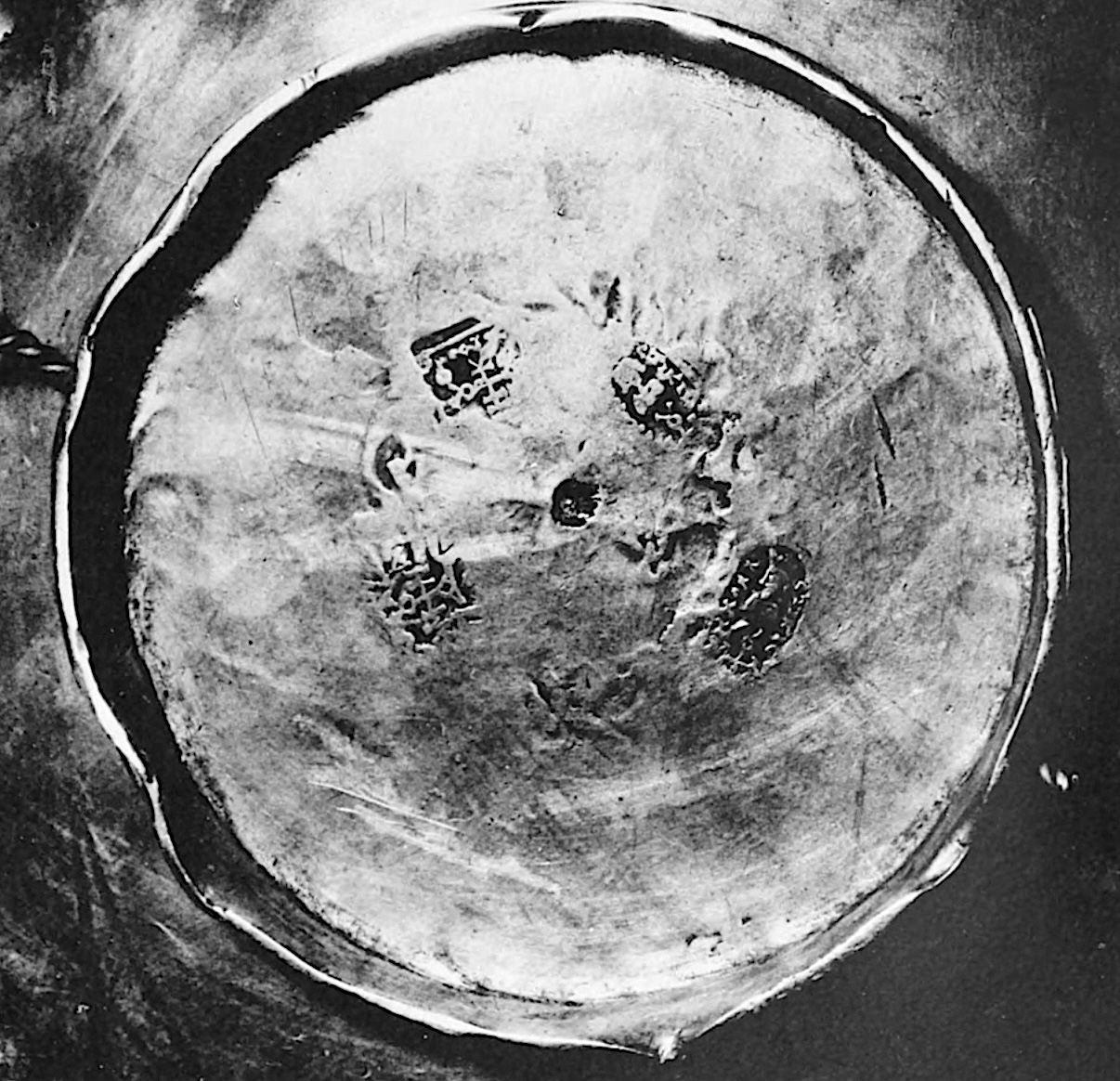
Five control stamps– monograms and busts– on the base of the vessel, within the foot ring. The stamps date the vessel to the early reign of Heraclius (613-629/630) (Dodd 1961: 198).
Anthropomorphic and zoic imagery was later carved into the front of the plate (Leshchenko 1976: 177, 182). Two figures with their arms wrapped around their stomachs stand on the central roundel. One wears distinctive crenulated headgear and the second has two plaits. A third smaller figure rides an animal with an open mouth.
From Sludka III (1870s).
*Key publication note: only discussed in the chapter by Leshchenko within Darkevich 1976.